

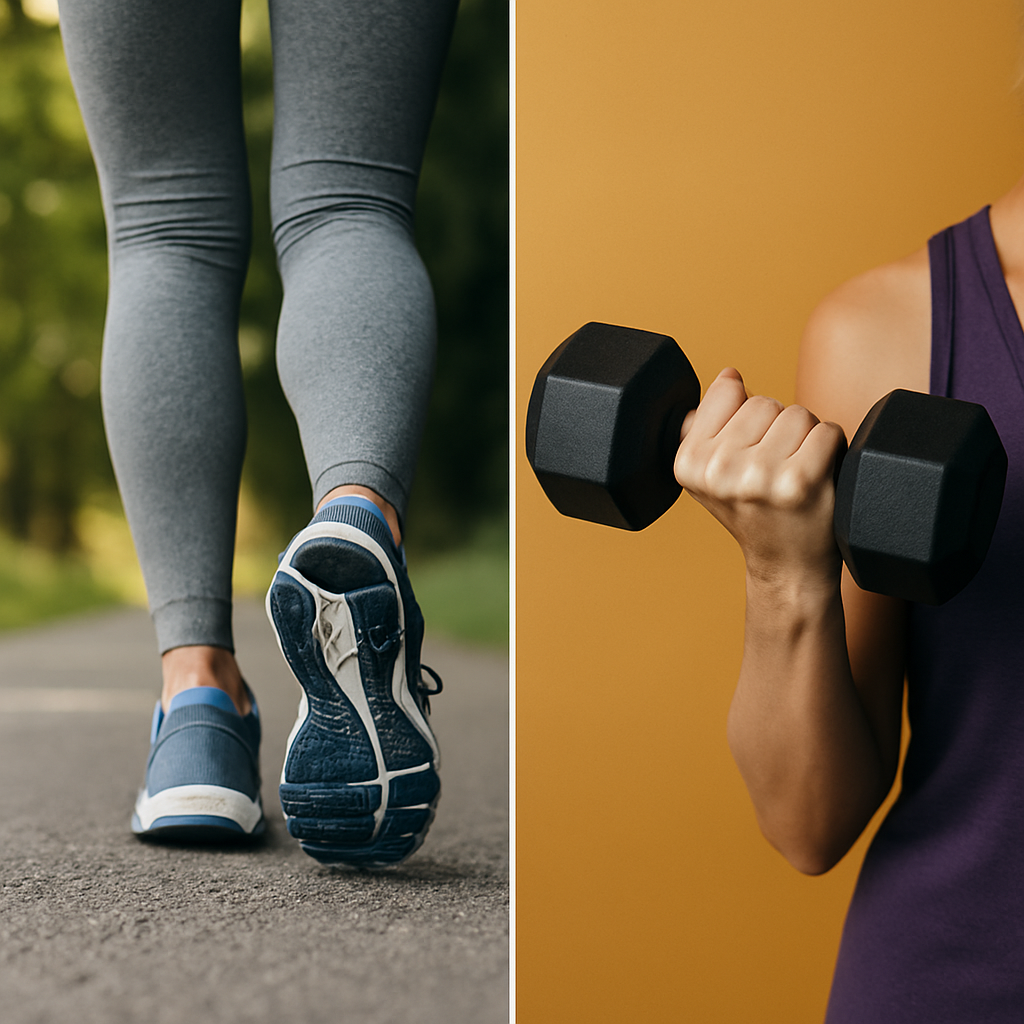
For years, running was the ultimate go-to for staying slim, clearing your head, and feeling healthy. Lace up, hit the road, and the extra pounds melted off. But in your 40s and 50s, something shifts. The miles pile on, but the results don’t follow. In fact, you may notice more stubborn belly fat, sore joints, and less muscle tone - even while running more.
The reason isn’t your willpower. It’s biology. Sarcopenia is the natural, age-related loss of muscle, which accelerates during perimenopause. And while running benefits the heart, relying on it alone may actually make muscle loss worse and place more strain on your cardiovascular system.
What Is Sarcopenia?
Sarcopenia is the gradual decline in muscle mass, strength, and function that begins around age 40 and accelerates in midlife. Research shows women can lose up to 1–2% of muscle mass per year after age 50 if they don’t intervene (NIH).
Muscle loss is about more than toned arms or a flat stomach. It sets off a chain reaction that affects your whole body:
- Weight gain: Less muscle = slower metabolism, making fat storage easier.
- Weaker bones: Muscle stimulates bone growth; without it, fracture risk rises.
- Poor balance and mobility: Loss of stability increases fall risk.
- Insulin resistance: Less muscle worsens blood sugar control, raising diabetes risk.
- Frailty with age: The less muscle you have now, the faster you lose independence later.
Why Running Alone Can Work Against You
Running has clear cardiovascular benefits, but as your primary (or only) exercise in perimenopause, it comes with drawbacks:
1. It Doesn’t Protect Muscle
Running is an endurance activity. It strengthens your heart and lungs, but it doesn’t provide the resistance your muscles need to grow or even maintain themselves.
2. It Can Accelerate Muscle Loss
Excessive endurance training increases cortisol, a stress hormone. Chronically elevated cortisol can break down muscle tissue, especially if protein intake is low. Less muscle means slower metabolism, which makes weight gain more likely even if you’re logging miles.
3. It May Strain the Heart if Muscle Is Low
Muscle isn’t just for strength. It acts as a metabolic reservoir that helps regulate blood sugar, blood pressure, and inflammation. When muscle mass is low, the heart must work harder to maintain metabolic balance. Over time, this can add strain to the cardiovascular system (AHA).
4. It Can Aggravate Joints
Estrogen decline reduces collagen and joint cushioning. The repetitive impact of long-distance running, without the stabilizing support of strong muscles, can increase pain and stiffness.
Bottom line: Running keeps your heart fit, but without muscle, it may start to work against you in midlife.
Why Muscle Is the Key to Staying Younger
Think of muscle as your “youth insurance.” More muscle keeps your body biologically younger, while losing it accelerates aging.
Benefits of maintaining muscle:
- Higher metabolism: Burn more calories at rest.
- Better weight control: Easier fat loss, especially belly fat.
- Bone strength: Reduced risk of osteoporosis.
- Joint support: Less stiffness, more mobility.
- Longevity: Stronger muscles are linked to longer, healthier lives.
Muscle is the fountain of youth hiding in plain sight and the most powerful tool against perimenopausal weight gain and decline.
How to Counter Muscle Loss
🏋️ Strength Training is Essential
Strength training provides the resistance your body needs to build and maintain muscle.
- Frequency: At least 2–3 times per week.
- Movements: Squats, deadlifts, push-ups, rows, lunges, presses.
- Load: Use weights heavy enough to challenge you within 6-8 reps.
Strength training not only builds muscle but also improves balance, posture, and confidence. Maintain proper movement technique is critical and much as consistency.
🍳 Prioritize Protein
Your body needs more protein in midlife to stimulate muscle protein synthesis.
- Aim for: About 0.8–1 gram of protein per pound of goal body weight (varies by individual).
- Spread it out: Include protein in every meal and snack.
- Good sources: Eggs, poultry, lean red meats (wild game/buffalo), fish, Greek yogurt, beans, lentils, protein shakes.
Protein supports muscle repair, steadies blood sugar, and helps curb cravings.
😴 Recover Properly
Muscles don’t grow in the gym. They grow during recovery.
- Sleep: 7–9 hours supports growth hormone release and repair.
- Stress: Chronic stress breaks down muscle. Meditation, yoga, and mindfulness lower cortisol.
- Rest days: Alternate heavy strength sessions with lighter activity.
🥤 Eliminate Sugary Drinks
Sodas, energy drinks, and sweetened coffees spike blood sugar, worsen inflammation, and speed up fat gain. Choose water, sparkling water, herbal teas, or coffee without sugar.
⚡ Rethink Cardio
Don’t ditch running altogether, just rebalance.
- Replace long endurance runs with interval training (sprints, hills, HIIT).
- Cross-train with low-impact cardio like cycling, rowing, or swimming.
- Blend cardio with strength in circuit workouts for the best of both worlds.
- Move by going on walks daily (at least 2-3 miles per day).
Natural Supports for Energy, Recovery, and Stress
Supplements can help reduce stress, improve sleep, and support muscle recovery:
- Ashwagandha (Hormone Balance, Calm Nights): Improves strength and reduces cortisol, helping muscle retention (PubMed).
- Maca Root (Hormone Balance): Supports stamina and vitality.
- Lion’s Mane Mushroom (Brain Fog & Energy): Enhances nerve signaling and focus, keeping workouts sharp (PubMed).
- Rhodiola Rosea (Brain Fog & Energy): Improves endurance and reduces fatigue (PubMed).
- Magnesium Bisglycinate (Calm Nights): Relaxes muscles, supports recovery, and improves sleep quality.
These can be used whether you choose HRT or prefer natural support.
What About HRT?
Hormone replacement therapy (HRT) can help preserve muscle and bone density by restoring estrogen. But it is not a substitute for strength training or nutrition. Even on HRT, you must stress muscles and feed them properly to counter sarcopenia.
The Takeaway
Running served you well in the past, but in perimenopause, relying on it alone isn’t enough, and in some cases, it may even work against you. Without strength training and protein, muscle loss accelerates, metabolism slows, and the heart and joints carry more strain.
The solution is clear:
- Build strength through resistance training.
- Fuel your body with protein.
- Recover with sleep and stress management.
- Limit sugary drinks and rebalance your cardio.
At Sisterhood Supplements, we created Hormone Balance, Calm Nights, and Brain Fog & Energy to support energy, stress resilience, and recovery so women can thrive through this transition and beyond.
Muscle is your fountain of youth. Protect it, and you protect your health, your independence, and your future.
References
- Cruz-Jentoft, A. J., et al. (2019). Sarcopenia: Revised European consensus on definition and diagnosis. Age and Ageing, 48(1), 16–31. NIH/PMC7602248
- Chandrasekhar, K., et al. (2012). Ashwagandha root extract and muscle strength. Indian Journal of Psychological Medicine, 34(3), 255–262. PubMed
- Nagano, M., et al. (2010). Hericium erinaceus intake improves mild cognitive impairment. Biomedical Research, 31(4), 231–237. PubMed
- Sousa, A., et al. (2017). Anti-fatigue effects of Rhodiola rosea extract. Frontiers in Pharmacology, 8, 465. PubMed
- Boyle, N. B., et al. (2017). Effects of magnesium supplementation on stress and recovery. Nutrients, 9(5), 429. PMC5452159
- American Heart Association. (2021). Skeletal muscle and cardiovascular health. Circulation, 143(16), 1742–1756. AHA
- Harvard Health Publishing. (2023). Perimenopause: Rocky road to menopause. Harvard Health
- Mayo Clinic. (2023). Perimenopause: Symptoms & causes. Mayo Clinic


