

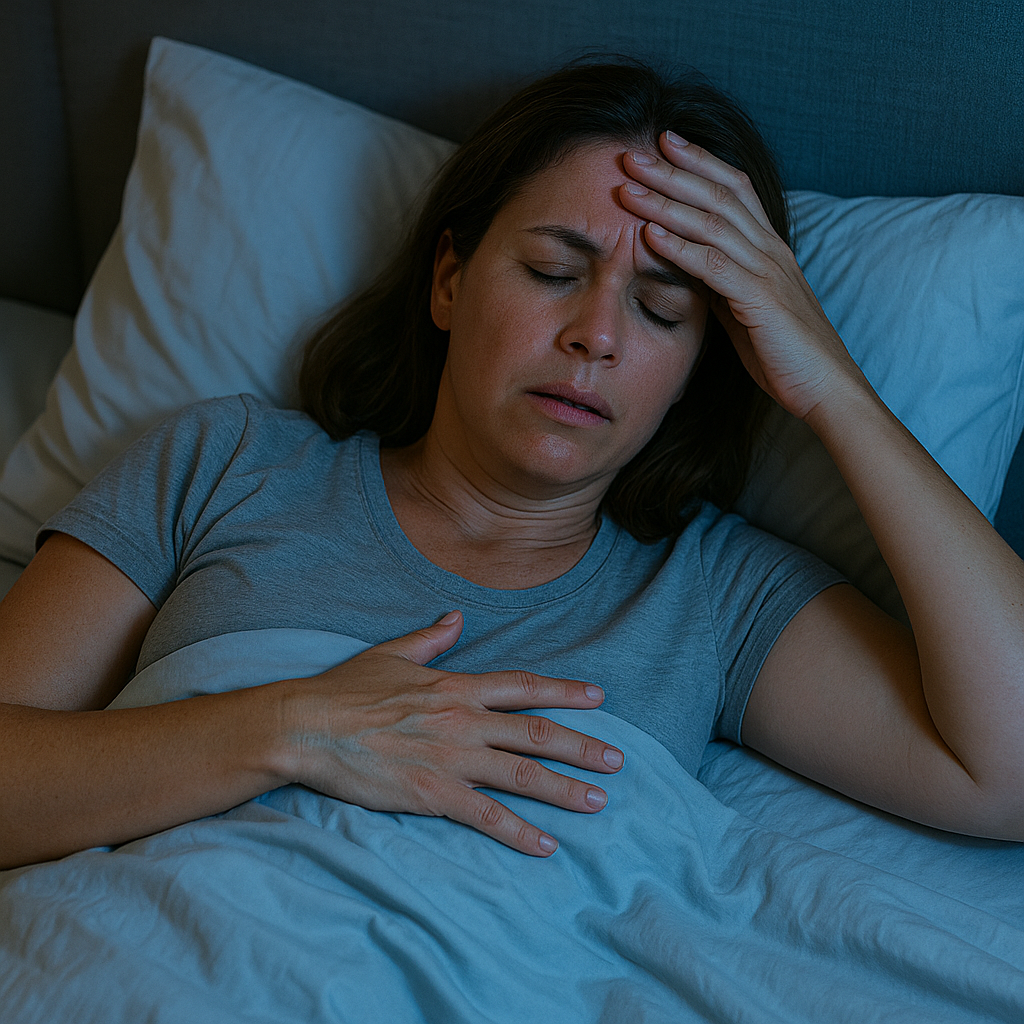
It’s 2:17 a.m. You’re wide awake, staring at the ceiling, doing the math: “If I fall asleep right now, I can still get four hours…” You roll over, kick off the covers, grab some water, and close your eyes. Ten minutes later you’re still awake.
Sound familiar? You’re not alone. Up to 56% of women report new or worsening sleep problems during perimenopause (NIH). Between hot flashes, hormone shifts, and a brain that won’t turn off, restful sleep can feel like a distant memory.
But there’s good news: once you understand why sleep gets messy in perimenopause, you can find strategies, both natural and medical, that actually help.
What’s Really Happening to Your Sleep in Perimenopause
Sleep problems during perimenopause aren’t “just in your head.” They’re directly tied to the hormonal rollercoaster your body is riding.
Here’s the breakdown:
1. Estrogen & Progesterone Decline
- Estrogen helps regulate serotonin and melatonin, the hormones that make you feel drowsy and maintain sleep cycles. When estrogen drops, your sleep rhythms get out of sync.
- Progesterone has natural sedative effects, often called the “calming hormone.” Its decline can make it harder to fall asleep and stay asleep (Mayo Clinic).
2. Night Sweats & Hot Flashes
Up to 80% of women experience hot flashes, many at night, which literally wake you drenched in sweat (SWAN Study). Once you’re awake, anxiety about getting back to sleep keeps you stuck.
3. Cortisol Spikes
Perimenopause can make your stress response more sensitive. Elevated cortisol at night signals “wake up,” not “go to sleep” (PMC).
4. Melatonin Shifts
Melatonin production naturally decreases with age, and fluctuating hormones in perimenopause make it even harder for your body to send strong “it’s bedtime” signals.
5. Sleep Disorders Become More Common
Perimenopause raises the risk of sleep apnea and restless legs syndrome (NIH). Sometimes, what feels like “just menopause insomnia” is actually an underlying condition.
The Real-Life Impact
Poor sleep during perimenopause doesn’t just leave you tired…it impacts nearly every part of life:
- Daytime fatigue: Even simple tasks feel impossible.
- Brain fog: Forgetting why you walked into the kitchen (again).
- Mood swings: Irritability, anxiety, or depression worsen without restorative sleep.
- Relationship strain: Sharing a bed can get complicated when you’re tossing, turning, and kicking off covers.
- Health risks: Chronic sleep loss is linked to weight gain, heart disease, and reduced immunity.
Your Sleep Survival Toolkit
There’s no one magic solution, but here’s what research (and women’s lived experience) shows can help.
🌙 1. Sleep Hygiene 101
The basics still matter especially now.
- Keep a consistent bedtime and wake time (yes, even on weekends).
- Make your bedroom cool, dark, and quiet—ideal temp is around 65°F.
- Use moisture-wicking sheets and pajamas if night sweats are a problem.
- Avoid screens and bright light an hour before bed (blue light suppresses melatonin).
🧘 2. Stress Reduction Before Bed
A racing mind is one of the biggest culprits.
- Try 10 minutes of deep breathing or meditation. Meditation is shown to improve sleep in midlife women (Sleep Health Journal).
- Gentle yoga or stretching can lower evening cortisol.
- Keep a worry journal - write it down, leave it for tomorrow.
🍵 3. Nutrition & Lifestyle Tweaks
- Limit caffeine after 2 p.m. It lingers in your system for hours.
- Cut back on alcohol; it may make you sleepy at first but leads to night wakings.
- Stay hydrated, but taper fluids after dinner to avoid 3 a.m. bathroom trips.
🌿 4. Natural Supports
Research-backed nutrients and herbs can help ease perimenopausal sleep struggles:
- Magnesium (especially bisglycinate): Supports muscle relaxation, calms the nervous system, and may improve sleep quality (Journal of Research in Medical Sciences).
- Valerian root: Meta-analyses suggest it can reduce time to fall asleep and improve sleep quality in some women (PubMed).
- Ashwagandha: A double-blind trial showed improved sleep onset and quality with ashwagandha supplementation (PubMed).
- L-Theanine: Promotes relaxation and reduces stress-driven insomnia.
(All four of these are found in our Calm Nights formula, designed to support restful, natural sleep.)
💊 5. Hormone Therapy (HRT) – The Medical Option
HRT can be very effective for sleep disturbances in perimenopause, especially when hot flashes are the main trigger (Harvard Health).
That said, not every woman wants to use HRT, and not every woman is a candidate. Many women choose to combine medical treatment with natural support, building a personalized approach that works best for them.
When to See Your Doctor
Not every sleep struggle is “just menopause.” Talk to your provider if:
- You regularly sleep less than 4–5 hours a night.
- Snoring, gasping, or pauses in breathing may suggest sleep apnea.
- You have restless legs or nighttime tingling.
- Insomnia is causing depression, anxiety, or severe fatigue.
The Takeaway
Sleep disturbances during perimenopause are frustrating, exhausting, and very real. They’re not a reflection of your willpower. They’re the result of complex hormone changes in your brain and body.
The good news: there are practical, science-backed ways to find relief. Whether it’s cooling down your room, using natural supports like magnesium and valerian, or exploring HRT with your doctor, you can find your way back to better rest.
At Sisterhood Supplements, we believe women deserve more than “just deal with it.” Sleep is foundational to health, and we created our Calm Nights formula to support women through this transition. Because everyone deserves to wake up refreshed, not wrecked.
References
- National Institutes of Health. (2018). Sleep and Women’s Health. NIH. PMC6099471
- Mayo Clinic. (2023). Perimenopause: Symptoms & causes. Mayo Clinic
- SWAN Study. (2015). Up to 14 years of hot flashes found in menopause study. SWAN Study
- Kalmbach, D. A., et al. (2019). Mindfulness-based therapy for insomnia in women during perimenopause. Sleep Health, 5(4), 356–368. PubMed
- Abbasi, B., et al. (2012). The effect of magnesium supplementation on primary insomnia. Journal of Research in Medical Sciences, 17(12), 1161–1169. PMC3703169
- Fernandez-San-Martin, M. I., et al. (2010). Valerian for sleep: A systematic review and meta-analysis. Sleep Medicine, 11(6), 505–511. PubMed
- Langade, D., et al. (2019). Efficacy and Safety of Ashwagandha Root Extract in Insomnia and Anxiety: A Double-blind, Randomized Study. Cureus, 11(9), e5797. PubMed
- Harvard Health Publishing. (2023). Perimenopause: Rocky road to menopause. Harvard Health
- NHLBI. (2023). Sleep Apnea. National Heart, Lung, and Blood Institute. NHLBI


1 comment
Feeling your heart race, flutter, or pound can be alarming during perimenopause.