

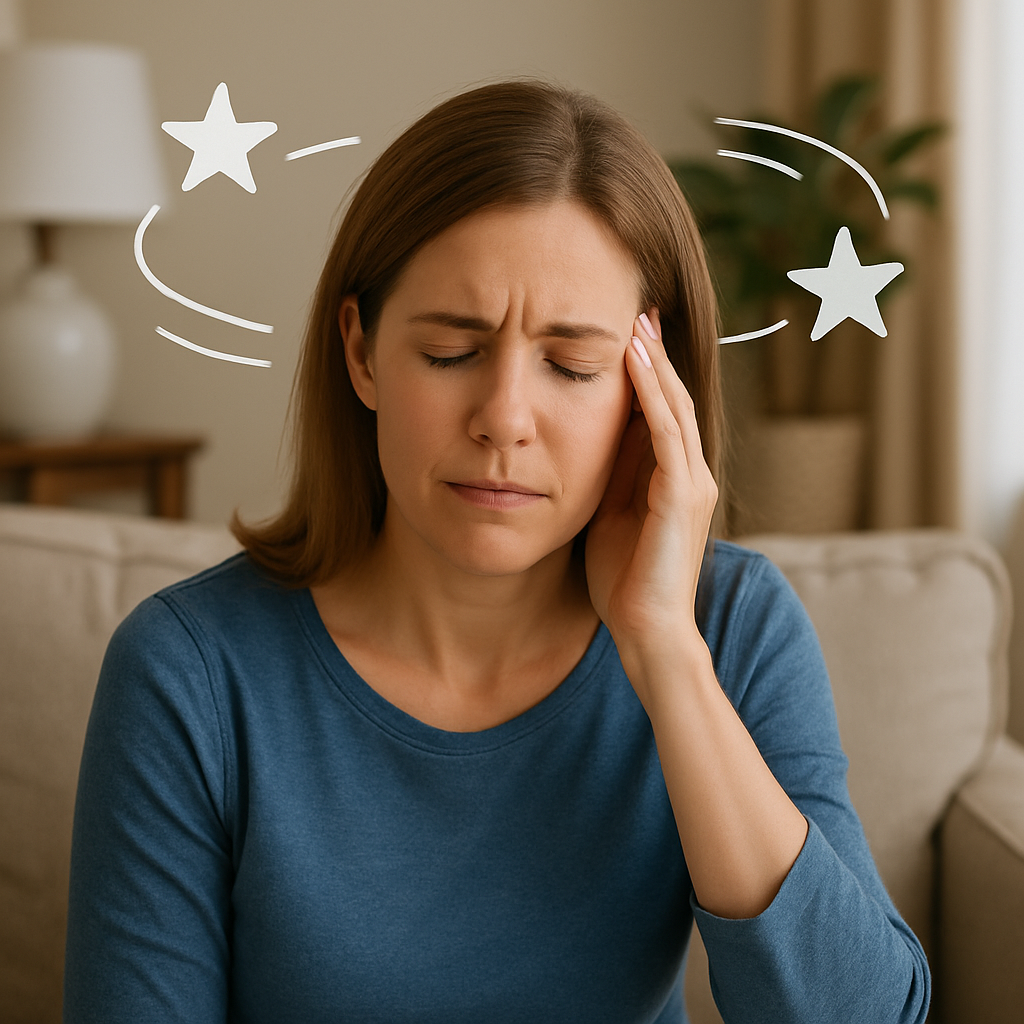
You roll over in bed and suddenly the room feels like it’s spinning. Or you stand up too quickly and feel lightheaded, unsteady, maybe even a little nauseous. Sometimes it passes in seconds, other times it lingers long enough to make you hold onto the nearest wall.
This dizzy, spinning sensation is called vertigo, and while it’s not as widely talked about as hot flashes or night sweats, many women experience it during perimenopause.
The tricky part? Vertigo has many possible causes, from inner ear changes to circulation issues, so it often takes women by surprise when it shows up alongside hormonal shifts. But research shows estrogen plays an important role in balance, blood flow, and even the inner ear (NIH).
What Vertigo Feels Like
Vertigo is more than just feeling “a little dizzy.” It can include:
- A spinning sensation (as if the room is moving)
- Lightheadedness or imbalance
- Nausea or queasiness
- Trouble focusing or walking straight
- Symptoms triggered by head movement (turning, rolling over, standing up quickly)
Some women also report “floaty” feelings or motion sensitivity when riding in a car or even scrolling on a phone.
Why Perimenopause Can Trigger Vertigo
1. Estrogen and the Inner Ear
Estrogen supports blood flow and nerve signaling in the vestibular system (the inner ear structure that controls balance). Fluctuations in estrogen can make this system more sensitive, leading to dizziness or vertigo episodes (PMC).
2. Blood Vessel Flexibility
Estrogen helps keep blood vessels elastic. When levels decline, circulation to the brain and inner ear can change, sometimes triggering vertigo or lightheadedness.
3. Cortisol and Stress
Hormonal shifts can heighten stress reactivity. Cortisol spikes raise blood pressure and heart rate, which can contribute to dizziness or feelings of imbalance.
4. Sleep Deprivation
Poor sleep disrupts blood pressure regulation and brain signaling, increasing dizziness risk.
5. Overlap with Other Conditions
Vertigo can also come from benign paroxysmal positional vertigo (BPPV), low blood pressure, dehydration, migraines, or ear infections. That’s why it’s important to distinguish what’s hormone-driven versus another cause.
The Bigger Picture: Estrogen and Long-Term Balance
Estrogen doesn’t just influence cycles. It supports the brain, inner ear, and blood vessels. As levels drop during perimenopause and beyond, women face higher risks of dizziness, falls, and even cardiovascular disease.
This means vertigo in perimenopause isn’t just about comfort, it’s also a signal to start protecting balance and circulation now.
Simple steps like regular movement, hydration, limiting alcohol and sugary drinks, and nervous system support with herbs and minerals can make a big difference now and in the long term.
The Real-Life Impact
Vertigo may sound minor, but its impact can be huge:
- Daily functioning: Feeling unstable makes driving, walking, or even standing uncomfortable.
- Work: Sudden dizziness during meetings or presentations can be embarrassing or disruptive.
- Sleep: Rolling over at night can trigger spinning sensations.
- Mental health: The unpredictability of vertigo can create anxiety about when the next episode will strike.
Practical Strategies to Reduce Vertigo
💧 Hydrate Consistently
Dehydration worsens dizziness. Aim for steady water intake and avoid relying on coffee or energy drinks.
🥤 Avoid Sugary Drinks & Excess Alcohol
Both cause blood sugar spikes and crashes, which can worsen lightheadedness and strain circulation.
🍽️ Stabilize Blood Sugar
Skipping meals or eating high-sugar foods can trigger dizziness. Steady protein and fiber intake help balance energy and prevent crashes.
🧘 Manage Stress
Cortisol surges can make vertigo worse.
- Breathing exercises and meditation calm the nervous system.
- Yoga and gentle stretching improve circulation and reduce tension.
🛌 Protect Your Sleep
Better sleep supports balance and circulation. Keep a consistent routine, reduce screen time before bed, and use magnesium for relaxation.
🏃 Gentle Movement
Regular activity strengthens the vestibular system and circulation. Even walking or light balance exercises can help.
Natural Supports for Balance and Nerve Health
Certain herbs and minerals may reduce dizziness triggers by calming the nervous system, improving circulation, and supporting nerve signaling:
- Magnesium Bisglycinate: Supports vascular relaxation and nerve stability (PMC). Found in Calm Nights.
- Ashwagandha: Reduces stress and cortisol, lowering nervous system overreactivity (PubMed). Found in Hormone Balance and Calm Nights.
- Lion’s Mane Mushroom: Supports nerve growth factor (NGF), aiding nervous system resilience (PubMed). Present in Brain Fog & Energy.
- Rhodiola Rosea: Helps reduce fatigue and stabilize stress responses, which can minimize dizziness linked to nervous system imbalance (PubMed). Found in Brain Fog & Energy.
- L-Theanine: Promotes calm focus without sedation, helpful when anxiety and dizziness overlap. Found in Calm Nights and Brain Fog & Energy.
These supports can be used whether you choose HRT, can’t take it, or prefer an all-natural approach.
What About HRT?
Hormone replacement therapy (HRT) may improve circulation and reduce hormone-driven vestibular sensitivity for some women, though it’s not universally used for vertigo. It can be part of a holistic strategy when appropriate (Mayo Clinic).
For women who don’t want or can’t take HRT, natural supports like magnesium, ashwagandha, and lion’s mane can still provide meaningful help.
When to See Your Doctor
Always get medical evaluation if vertigo is:
- Sudden, severe, or one-sided
- Accompanied by headache, slurred speech, vision problems, or weakness (possible stroke warning)
- Persistent and worsening
- Paired with ear pain, ringing, or hearing loss (possible ear infection or Meniere’s disease)
Even if symptoms are mild, it’s worth mentioning at your next appointment for reassurance and safety.
The Takeaway
Vertigo in perimenopause may be unsettling, but you’re not imagining it and you’re not alone. Hormonal changes can affect your inner ear, circulation, and stress response, creating dizziness or spinning sensations.
The good news? With hydration, blood sugar balance, stress management, and natural supports like magnesium, ashwagandha, lion’s mane, rhodiola, and L-theanine, you can calm the spin and protect your long-term balance and brain health.
At Sisterhood Supplements, we created Calm Nights, Hormone Balance, and Brain Fog & Energy to support women through exactly these challenges. Whether you’re using HRT, can’t take it, or prefer to stay natural, you deserve steady ground, both literally and figuratively, through perimenopause.
Because while life may feel like a whirlwind at times, the room itself shouldn’t be spinning.
References
- Li, H., et al. (2019). Hormones and vestibular disorders in women: A review. Frontiers in Endocrinology, 10, 763. PMC6828902
- Harvard Health Publishing. (2023). Perimenopause: Rocky road to menopause. Harvard Health
- Mayo Clinic. (2023). Perimenopause: Symptoms & causes. Mayo Clinic
- Boyle, N. B., et al. (2017). Effects of magnesium supplementation on stress and nervous system excitability. Nutrients, 9(5), 429. PMC5452159
- Chandrasekhar, K., et al. (2012). Safety and efficacy of ashwagandha root extract in reducing stress and anxiety. Indian Journal of Psychological Medicine, 34(3), 255–262. PubMed
- Nagano, M., et al. (2010). Reduction of depression and anxiety by 4 weeks Hericium erinaceus intake. Biomedical Research, 31(4), 231–237. PubMed
- Sousa, A., et al. (2017). Neuroprotective effects of Rhodiola rosea extract. Frontiers in Pharmacology, 8, 465. PubMed


