

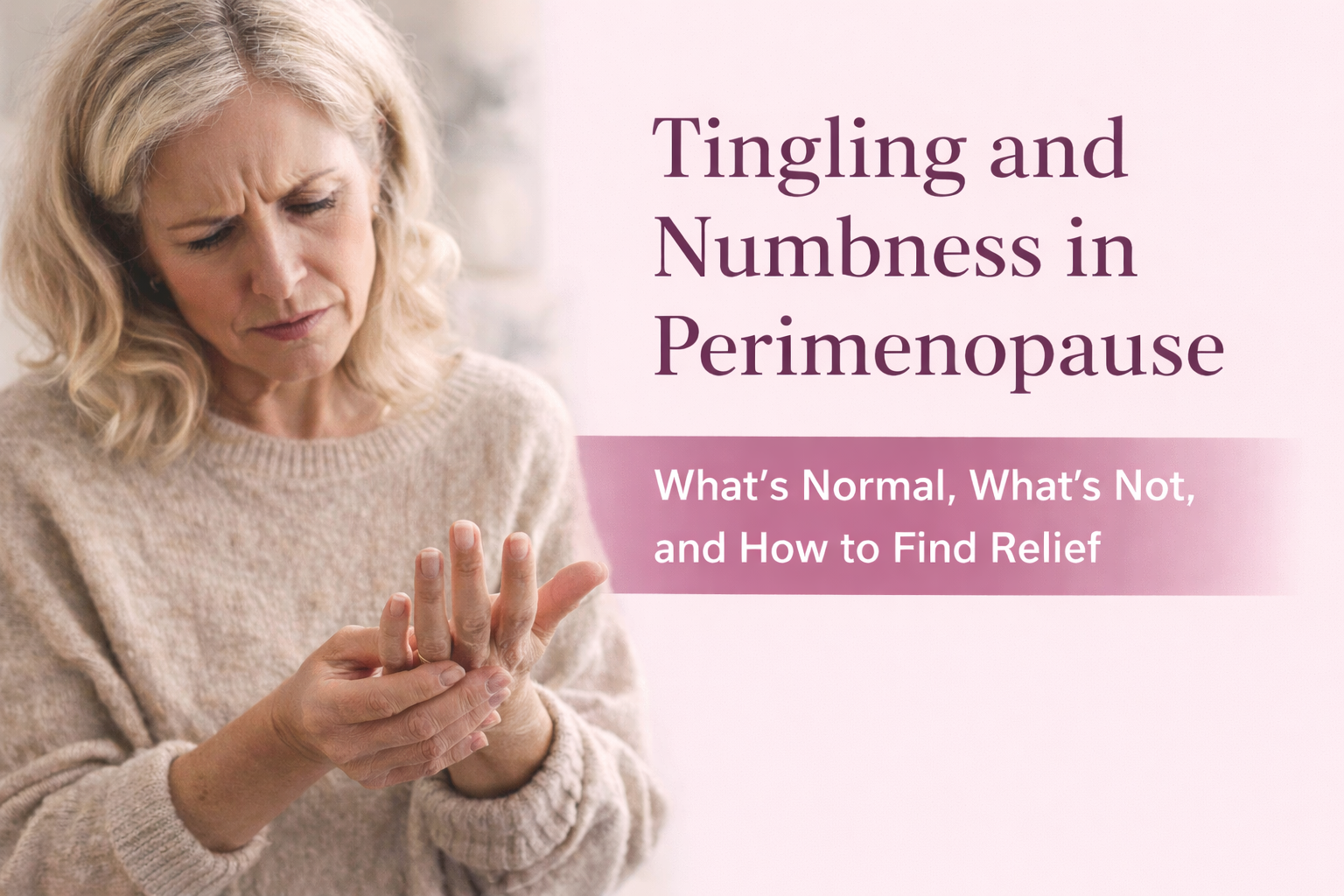
You’re lying in bed, trying to relax, when suddenly your hands feel like they’ve “fallen asleep.” Or you’re at your desk typing and your feet start buzzing with pins-and-needles out of nowhere. Sometimes it’s a fleeting numb patch, other times it’s a prickly sensation that lingers just long enough to make you wonder: What on earth is happening?
This tingling or numbness known medically as paresthesia, is one of the less obvious but surprisingly common symptoms of perimenopause. Many women don’t realize it’s linked to hormonal changes, which makes it confusing and sometimes scary.
The good news: in most cases, these sensations are harmless and temporary. But they’re also a signal from your body that it’s time to give your nerves and circulation some extra care.
What Tingling and Numbness Feel Like
Paresthesia can show up in different ways:
- Pins-and-needles in the hands, feet, arms, or legs
- A buzzing or “crawling” feeling under the skin
- Sudden numbness in a patch of skin
- Burning or prickling sensations
- Worsening at night or after sitting in one position too long
While occasional tingling is common, it’s important to understand why it can happen during perimenopause and when it’s worth talking to your doctor.
Why Perimenopause Can Trigger Tingling
Hormonal shifts in perimenopause affect more than just your cycle, they influence your entire nervous system.
1. Estrogen’s Role in Nerve Health
Estrogen supports healthy blood flow and protects nerve cells. As levels fluctuate, nerve signaling can get disrupted, leading to misfires that feel like tingling or numbness (NIH).
2. Circulation Changes
Estrogen also helps keep blood vessels flexible. As it declines, circulation may become less efficient, sometimes reducing blood flow to extremities.
3. Magnesium Deficiency
Magnesium is essential for proper nerve function. Low levels can make nerves more excitable, increasing the risk of tingling or restless sensations (PMC).
4. Stress and Anxiety
High cortisol and anxious breathing patterns (like hyperventilation) can cause tingling in the face, hands, or feet. Since perimenopause often heightens stress reactivity, this is a common trigger.
5. Sleep Disruption
Night sweats, insomnia, and fragmented sleep reduce nerve recovery time, making paresthesia more noticeable.
The Bigger Picture: Estrogen and Long-Term Nerve & Brain Health
Estrogen isn’t just about fertility. It plays a critical role in maintaining nerve insulation (myelin), brain signaling, and circulation. As estrogen declines, women face increased risks of conditions like neuropathy and even cognitive decline later in life (Harvard Health).
That’s why perimenopause is more than just a transition. It’s a window of opportunity to protect long-term nerve and brain health. The steps you take now can support clarity, mobility, and well-being for years to come.
The Real-Life Impact
While tingling and numbness aren’t always painful, they can:
- Disrupt sleep when they strike at night
- Make everyday tasks like typing or holding a phone uncomfortable
- Trigger anxiety about possible nerve or heart conditions
- Undermine confidence in your body’s stability
Even if the sensations are harmless, they can still affect quality of life.
Practical Ways to Reduce Tingling & Numbness
💧 Stay Hydrated
Dehydration can make nerves more sensitive. Aim for steady water intake throughout the day.
🥤 Avoid Sugary Drinks
Sodas, energy drinks, and sweetened coffees cause blood sugar spikes, which strain circulation and can worsen tingling. Choose water, sparkling water, or unsweetened teas instead.
☕ Limit Stimulants
Too much caffeine, alcohol, or nicotine can over-activate the nervous system.
🏃 Keep Moving
Avoid sitting or standing in one position for too long. Gentle movement improves circulation and reduces pressure on nerves.
🧘 Manage Stress
Stress intensifies nervous system sensitivity. Practices like yoga, meditation, and breathing exercises can calm nerve reactivity.
🛌 Prioritize Restorative Sleep
Nerve repair happens during deep sleep. Keeping your bedroom cool, dark, and free of screens before bed can help.
Natural Supports for Nerve Health
Several herbs and minerals can help support nerve signaling, reduce stress-driven flare-ups, and promote long-term brain health:
- Magnesium Bisglycinate: Calms nerve excitability and supports relaxation (PMC). Included in Calm Nights.
- Ashwagandha: Reduces stress and cortisol, calming the nervous system (PubMed). Found in Hormone Balanceand Calm Nights.
- Lion’s Mane Mushroom: Supports nerve growth factor (NGF), which helps repair and regenerate nerves (PubMed). Present in Brain Fog & Energy.
- Rhodiola Rosea: Enhances resilience to stress and reduces fatigue, which can lessen tingling triggered by stress (PubMed). Included in Brain Fog & Energy.
- L-Theanine: Promotes calm focus and smooths nervous system reactivity. Found in Brain Fog & Energy and Calm Nights.
These natural supports are helpful whether you’re on HRT, can’t take it, or prefer an all-natural route.
What About HRT?
Hormone replacement therapy (HRT) can help regulate estrogen-related nerve and circulation changes for some women. It may reduce the frequency of tingling and numbness, but it’s not the right choice for everyone (Mayo Clinic).
That’s why many women combine medical treatment with natural supports, while others choose to go all-natural. Either way, there are options to feel better.
When to See Your Doctor
While tingling and numbness are common in perimenopause, some situations require medical evaluation:
- Sudden one-sided numbness or weakness (possible stroke warning)
- Tingling with slurred speech, confusion, or vision changes
- Progressive numbness or weakness in the hands or feet
- Persistent or painful sensations interfering with daily life
Always err on the side of caution - better to get checked and reassured than to ignore a potentially serious condition.
The Takeaway
Tingling and numbness during perimenopause are unsettling but often harmless symptoms of hormonal change. They’re also reminders of how important estrogen is for nerve and brain health. Not just now, but for the decades ahead.
By staying active, reducing stress, avoiding sugary drinks, and supporting your body with herbs and minerals like magnesium, ashwagandha, lion’s mane, rhodiola, and L-theanine, you can calm these sensations and protect your long-term health.
At Sisterhood Supplements, we created Calm Nights, Hormone Balance, and Brain Fog & Energy to give women compassionate, science-backed options. Whether you’re on HRT, can’t take it, or want to stay natural, you deserve clarity, calm, and confidence in your own body again.
Because tingling hands may be common in perimenopause, but feeling powerless about them doesn’t have to be.
References
- Greendale, G. A., et al. (2022). Cognitive and neurological symptoms in perimenopause. Menopause, 29(3), 267–276. NIH/PMC
- Harvard Health Publishing. (2023). Perimenopause: Rocky road to menopause. Harvard Health
- Boyle, N. B., et al. (2017). Effects of magnesium supplementation on stress and nerve excitability. Nutrients, 9(5), 429. PMC
- Chandrasekhar, K., et al. (2012). Safety and efficacy of ashwagandha root extract in reducing stress and anxiety. Indian Journal of Psychological Medicine, 34(3), 255–262. PubMed
- Nagano, M., et al. (2010). Reduction of depression and anxiety by 4 weeks Hericium erinaceus intake. Biomedical Research, 31(4), 231–237. PubMed
- Sousa, A., et al. (2017). Neuroprotective effects of Rhodiola rosea extract. Frontiers in Pharmacology, 8, 465. PubMed
- Mayo Clinic. (2023). Perimenopause: Symptoms & causes. Mayo Clinic


